
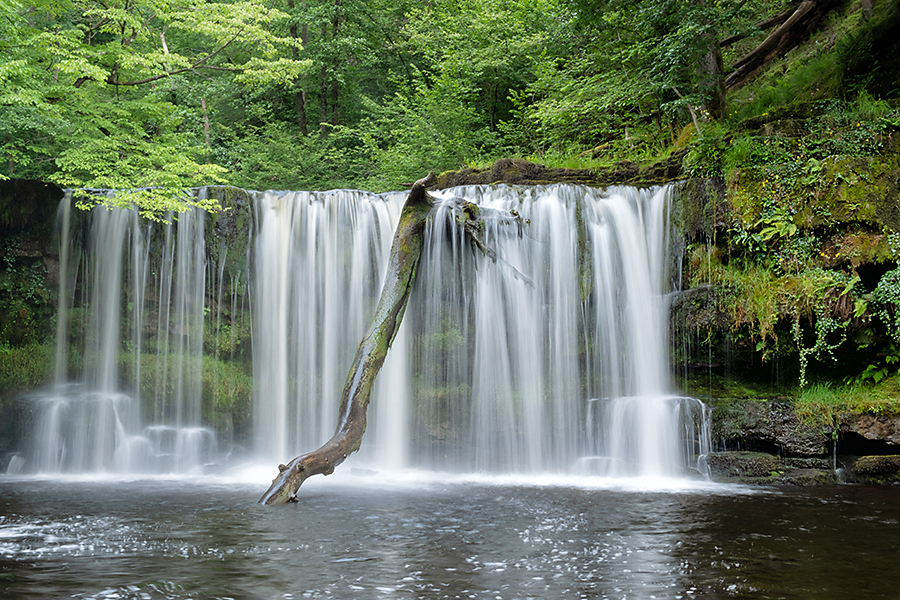
John hosts this weeks Lens-Artists Challenge #412—Places Shaped by Water. The brief is: Share up to six waterscapes—images where water shapes the scene. Choose your favorite places, your favorite photos, or a single location that inspires you. Natural or man‑made, peaceful or wild—if water helps tell the story, it’s fair game.
I wasn’t sure if I had six images of scenes where water has shaped the scene but I did find some. I’ve taken Johns brief literally for the first few images where water erosion is obvious.
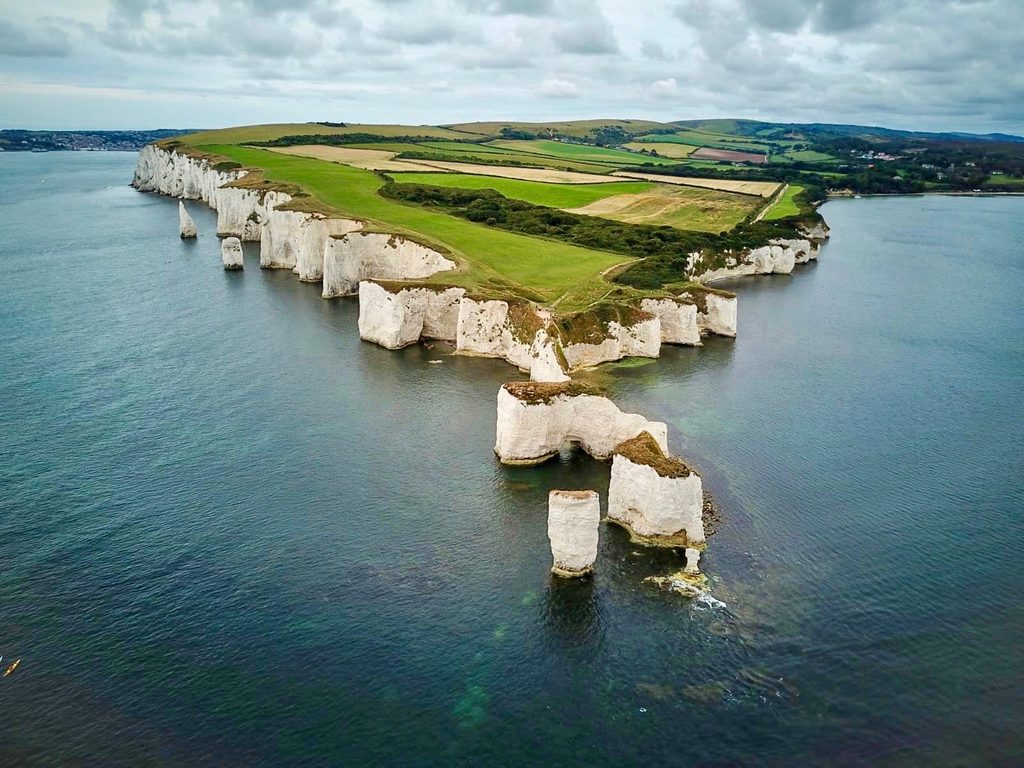
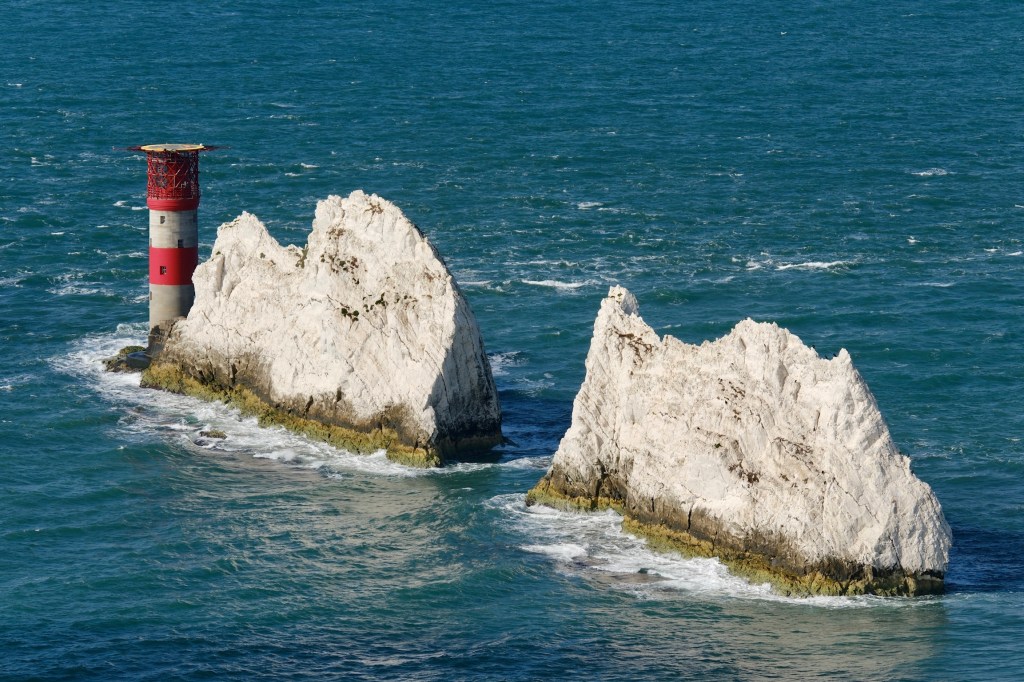
These two images are linked. The picture on the right is the UK mainland at Studland, on the Isle of Purbeck, Dorset – The image on the right shows two of the Needles on the Isle of Wight, UK. These two points are separated by the Solent, a 14 mile wide stretch of water between the two points in the pictures above. Millions of years ago both points were linked and they represent opposite ends of what was once a vast, ancient chalk ridge. I didn’t take the image on the left but I am in it, standing on the edge of the closest column still linked to the mainland. I got talking to a guy with a drone whilst we were there. He flew the drone out for me, took this image and then shared it with me.
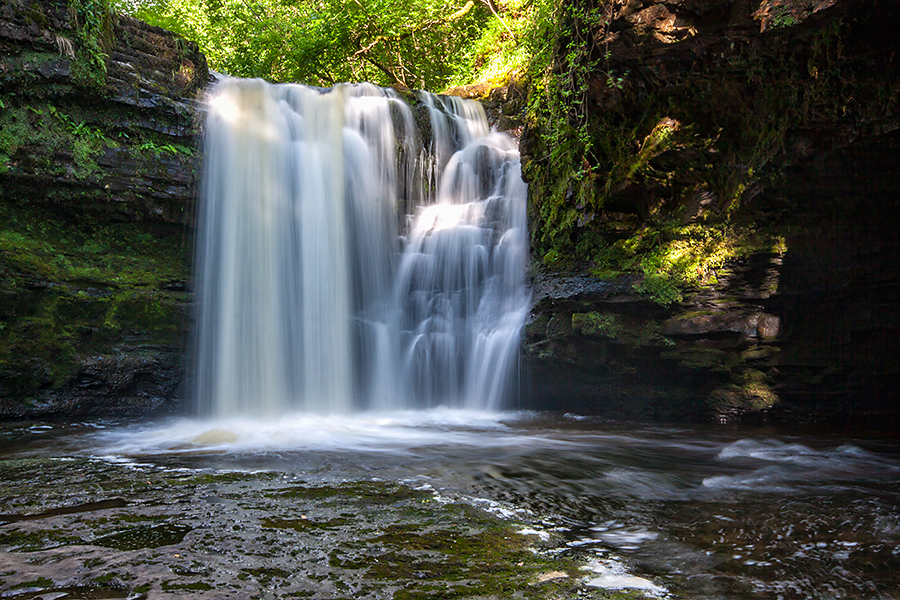
These falls are Sgwd Ddwli Isaf in Welsh or the Lower Gushing Falls on the River Nedd Fechan in the Brecon Beacons, Wales. It’s beautiful walking country and we’re regular visitors here. The waterfall walking route features dramatic geological erosion where fast-flowing rivers carve through alternating layers of hard sandstone and soft shales, creating spectacular step-like cascades and deep rock alcoves – That last sentence was taken from Google AI and I’m no geological expert, I just love stunning scenery.
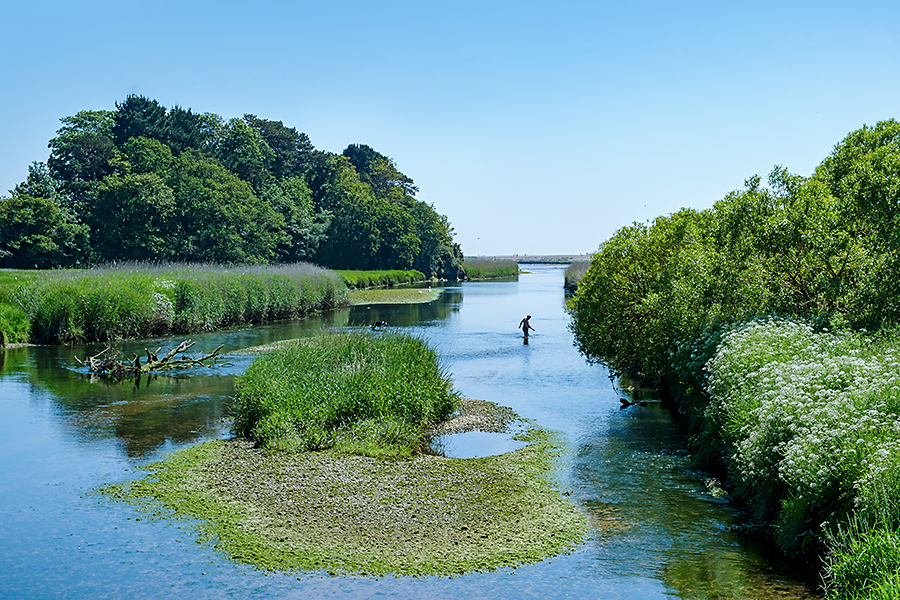
This is the River Otter, Devon, UK. The river is 29 miles long and enters into the English Channel which lies just behind the shingle bar in the far distance of this shot. The river has had a varied history across the centuries but these days is best known for its Beaver population. The Otter is the only river in England known to contain a wild breeding population of Eurasian beavers, a species that died out in Britain in around 1550. The origin of the population is not known; it was first noticed in 2013, apparently successfully bearing three kits the next year.
We’ve walked the river bank here numerous time but we’ve never seen the Beavers. I wanted to include a river image in my post. The guy crossing the river here just wandered into my shot as we were standing on a bridge looking down towards the coast. If you look closely you can see his dog on a little sandbank just behind him.
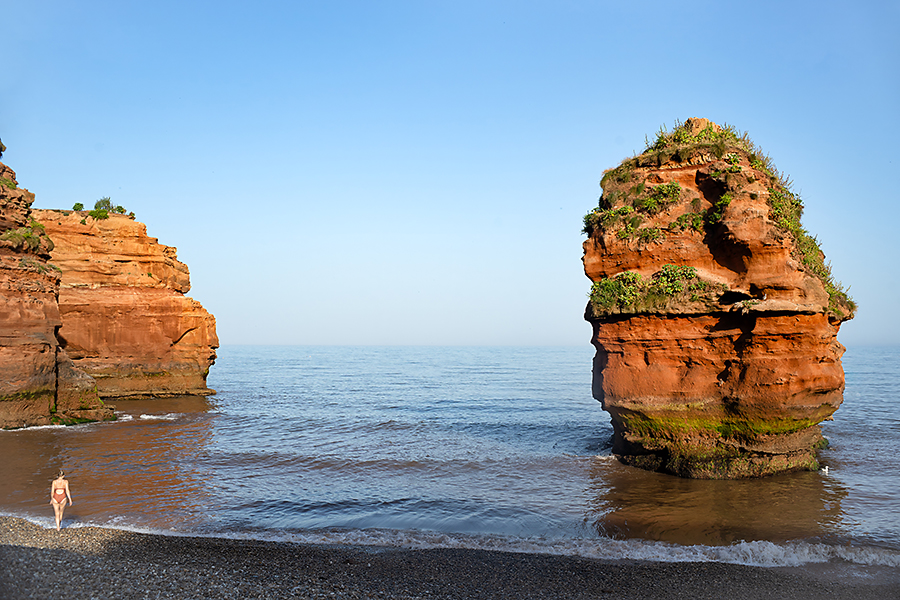
This is Ladram Bay, East Devon, UK. This red sandstone sea stack really is a feature carved out over millions of years by waves crashing into the rocks and slowly eroding the sandstone, carving out caves and arches. The stacks remain after an arch collapses. The stacks are quite striking and the red sandstone dominates the coastline here. Funnily enough it’s on the same stretch of coast as as the white cliffs shown in the images of Studland at the top of the page.
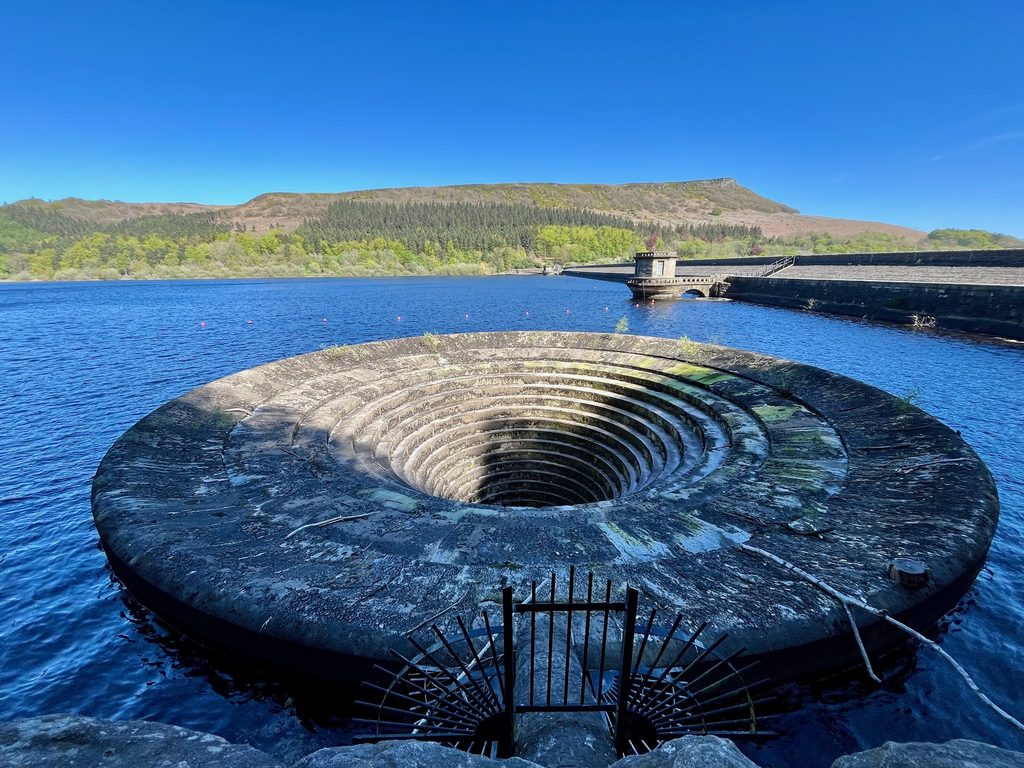
This is Ladybower Reservoir in the Peak District National Park, England. The image features one the the reservoirs large stone overflow plug holes. The reservoir was created in the 1930’s to meet the demand for heavy industry in the Midlands, UK. Two villages were lost when the valley was flooded to create the reservoir.
In 1943, 617 Squadron of the Royal Air Force (RAF), led by Wing Commander Guy Gibson, was secretly formed for a highly specialized mission: Operation Chastise. Their goal was to destroy three massive, heavily defended dams in Germany’s industrial heartland using Barnes Wallis’s revolutionary “bouncing bomb.”
To succeed, the pilots had to fly their massive, four-engine Avro Lancaster bombers at an incredibly perilous altitude of exactly 60 feet (18 meters) off the water, at night, while traveling at 220 mph. To train for this extreme low-level precision flying, they needed a landscape that perfectly matched the German valleys. They chose the Derwent Valley, utilizing the stone towers of the Derwent Dam (just upstream from Ladybower) as a precise target proxy.
We visited here earlier this year and spent a great day hiking up above the reservoir which sits in some beautiful countryside.
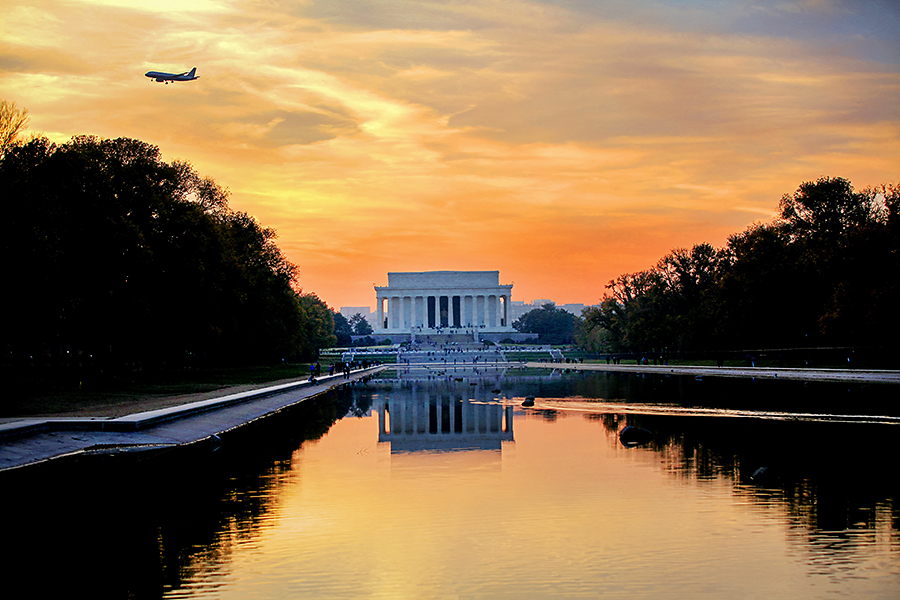
My final image is a man made water feature – The Lincoln Memorial Reflecting Pool, Washington DC. USA. There are lots of facts I could quote in relation to this water feature but I’ve typed enough now so I’ll keep to two. Firstly, it’s visited by an estimated 24 million people every year. Secondly it’s a location in one of my favourite movies – Forest Gump.
That’s it from me this week. Thanks to John for hosting and coming up with a great topic. I’m looking forward to seeing the rest of this weeks challenge responses.
All images: ©Stephen Hyde 2007-2026 – All rights reserved.
Steve, your waterscapes are breathtaking. Each one is so visually appealing and inspiring.
Thank you Egidio 🙂
Steve, I especially enjoyed your take on the opening photos, which focus on water shaping the environment. The waterfalls are gorgeous, and the River Otter image is stunning! Wonderful post!
Thank you John 🙂
A spectacular photo gallery, not just beautiful. I think my favorite is the first waterfall, although it’s hard to choose. 🌊✨
Thank you Aura 🙂
Beautiful images Steve, I especially love the way you captured the silky water at Sgwd Ddwli Isaf 😊
Thank you 🙂
Fabulous images and stories, Steve! The UK truly has many wonderful places with or on the water. The River Otto is my favorite, with the Wales waterfall a close second.
Thank you Joanne 🙂
Steve, your waterscapes are stunning. The waterfalls are my favorites.
Thank you Beth